Luca’s story: recovery as a mixed-race, LGBTQ+ man
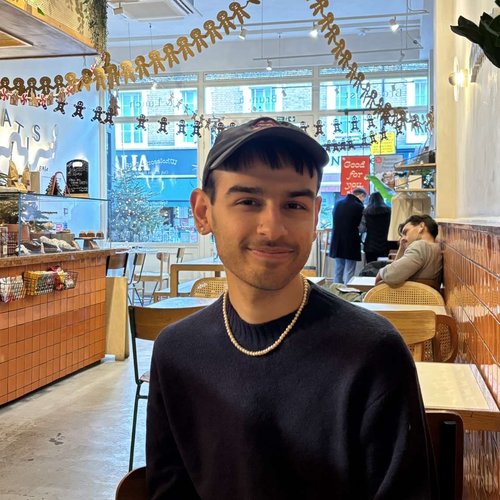
Eating disorder recovery is incredibly challenging for anyone – but if you’re a member of an under-represented community, it can add an extra layer of difficulty. Luca, a young, gay, mixed-race man from London, was diagnosed with anorexia in his teenage years. His gender, sexuality and culture affected his experience of his illness in a variety of ways - which ultimately brought him to a place of peace with his identities.
During his GCSES, Luca noticed that his relationship with food was different to his peers. At first, he felt confused because he didn’t realise eating disorders could affect men. He explains, “I just felt really abnormal. It didn’t help that at the time – and I think this is what probably spurred some of this on – I was being bullied because of my identity, especially being a gay male.”
Eventually, he raised his symptoms with his school, who told his parents and advised him to go to his GP. During his first appointment, Luca felt “there was like a real lack of understanding. I remember the GP saying, ’Oh, we'll get you to being one of those rugby boys in no time.’” That comment stayed with him: “I felt I wasn’t fitting into the ‘man’ box or what boys should want to do.”
Afterwards, he was referred to hospital, where he attended sessions as an outpatient for three years. At first, the meal plan he was given didn’t reflect the Maltese and Mauritian foods his family normally eat.
“We felt that [the meal plan] wouldn't help, because it would make what we have to do so different from what we do now, and the foods that we cook now - and make me feel even more different from my family,” he says. When the family raised the issue, it was addressed so the meal plan was more appropriate. “The treatment was able to encompass that part of my identity and make the meals more diverse. That was really good, and a positive of treatment.”
Having a meal plan that allowed him to take part in meals with his family was particularly important to Luca, because “ninety percent of the way I identified with the culture was through food.” When he was unwell, he was unable to eat the same food as his family and connect to his cultural heritage: “I definitely felt isolated. Mealtimes are meant to be some of the most fun, chatty times. But a lot of the time I was very distracted, irritable and so anxious that I couldn't enjoy any of those moments.”
Another aspect of his treatment was being asked to attend therapy with his family. Initially, his family felt wary because speaking openly about mental health wasn't common in their community. “When both of my parents heard about therapy, they were both a bit like ‘what, why do you need that?’ You could tell sometimes even when you'd raise it, they'd be physically uncomfortable - this was just so new to them, and new to us.”
However, attending therapy was a hugely positive experience – not just for Luca, but for his parents too. “Whether I liked it or not, it forced me to have those open conversations with my family. It forced me to speak about things that I probably would have kept inside for many years if I didn't have to go through that treatment,” he explains.
For them, it was probably as helpful as it was for me, because it forced them to have to listen to these conversations and engage in a level of depth that wouldn't have occurred in another scenario.
Luca says family therapy improved his relationship with his parents, and the family are more open with each other because of it, even years afterwards. “I feel like that has shaped the rest of our relationship. Now, I'm actually really open and able to talk about anything which is great, but if this hadn't have happened, I don't think we would be to that extent.”
After treatment, Luca felt “a lot more confident and comfortable. It's funny, I think it is really intertwined with identity and community, because I started to feel more accepted by the people around me. And I think that helped me to accept myself.”
Now Luca works for the NHS and volunteers with Beat, sharing his experience to provide vital insight into eating disorder recovery in underrepresented communities. One of the most important things he’s learned is that he can engage with his culture and sexuality while knowing he doesn’t have to change himself to fit in.
Sometimes, we think our culture is really entrenched but the beauty in it, and the beauty in your individuality is that you can change and mould the culture. You won't be a disappointment at all.
Luca advises anyone who relates to his experience to give people in their community the chance to support them: “I made so many assumptions about my family based on what I perceived their belief system to be. Give them the chance to show up for you. Sometimes that's really hard, but you’ve just got to take that first step.”
Help us change lives
Donate today to help us provide more vital support to people who are affected by eating disorders.
Related Pages
18 February 2026
When Millie became unwell with anorexia, her dad was her biggest support. Now recovered they raised over £5,000 for Beat.
Read more18 February 2026
Tommy shares how his family supported him every step of the way in his recovery from anorexia and bulimia.
Read more18 February 2026
Bryony shares her experience of recovery from bulimia and how finding community helped her.
Read more